
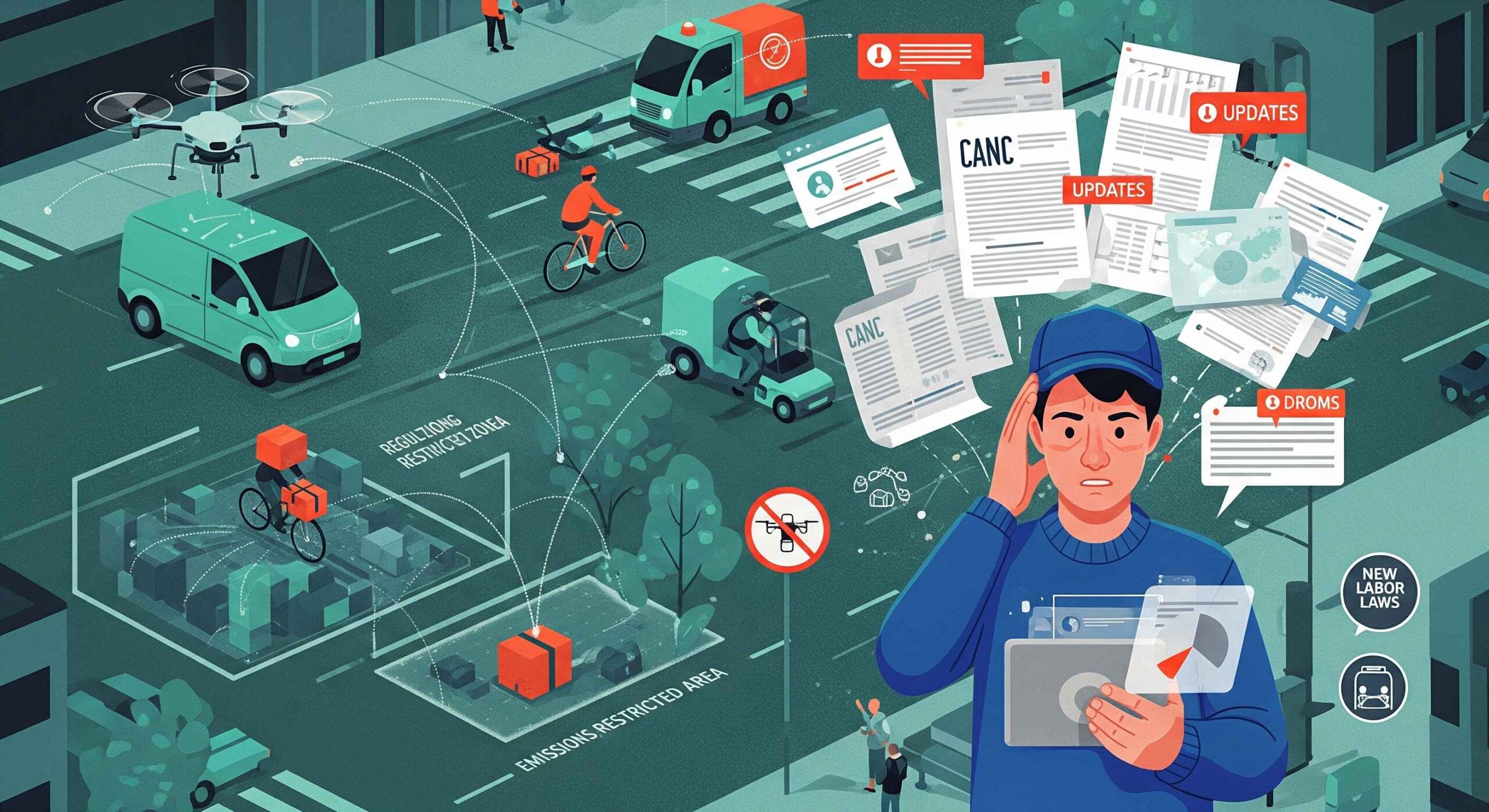
Latest Regulatory Updates Impacting Last-Mile Delivery Businesses
August 12, 2025 6:26 amOnline shoppers expect “order today, doorstep tomorrow,” pushing last-mile fleets to run faster than ever. Yet as vans weave through Manasquan, NJ, neighborhoods and urban hubs across New Jersey, a growing stack of rules shapes how those packages move. From fresh FMCSA last mile van regulation proposals to more challenging emissions targets, understanding today’s landscape is vital. This post breaks down the latest changes, shows where compliance gets tricky, and shares practical ways to keep routes and profits on track.
The Rulebook Keeps Growing
Consumer demand, safety concerns, and environmental goals continue to shape last-mile delivery regulations. Key agencies leading the charge include the FMCSA and DOT for vehicle safety, NHTSA on advanced braking tech, the EPA on greenhouse-gas cuts, the Department of Labor on worker status, and state and local authorities that regulate curb access and noise. Recent guidance for non-CDL vans puts smaller fleets under the same spotlight as long-haul carriers, widening the compliance net.
New Rules at a Glance
| Area | 2024-25 Update | Why It Matters |
|---|---|---|
| Vehicles & Maintenance | Incoming FMCSA safety-fitness procedures require documented inspections, while the EPA Phase 3 rule tightens emissions for model-year 2027 delivery trucks. | Poor records can ground a van and its revenue stream. |
| Driver Licensing & Training | DOT continues to enforce Driver Qualification File requirements (yes, even for non-CDL drivers over 10,000 lbs GVWR). Annual hours-of-service refreshers are a best industry practice, not a new mandate, but major shippers increasingly demand proof. | Violations lead to fines and lost contracts. |
| Insurance Requirements | Rising claims have pushed states to revisit minimums for liability and cargo. Many contractors now need dedicated last-mile delivery insurance rather than generic policies. | Adequate limits keep Amazon and FedEx contracts secure. |
| Data Privacy & Security | FTC guidance urges encryption for customer addresses and photo-proof-of-delivery images. | Breaches can trigger costly state penalties. |
| Environmental Rules | New Jersey fleet-credit programs reward electric vans ahead of federal GHG deadlines. | Early adoption can cut future retrofit costs. |
| Labor Standards | The DOL signaled it may roll back the 2024 employee-classification rule, but litigation continues. | Classification errors risk back wages and penalties. |
| Cross-Border Shipments | Canada’s CARM Release 2 now requires electronic customs filings and financial security for U.S. returns; missing the deadline causes clearance delays. | Slow filings equal delayed deliveries. |
Building a Compliance Game Plan
Stay Proactive
Follow FMCSA, EPA, and New Jersey state bulletins monthly.
Use compliance-tracking apps that flag expiring driver files.
Strengthen Your Insurance Bench
Review limits for cargo, liability, and workers’ compensation with a transportation insurance company that understands parcel vans. Specialized transportation insurance services often bundle telematics discounts, lowering premiums.
Leverage Tech
Route-optimization software can cut idle time, helping fleets meet tighter emissions caps while supporting last-mile delivery compliance goals.
Invest in People
Schedule quarterly driver huddles covering safe driving, customer etiquette, and new rules. Short video modules fit even peak-season shifts.
Expert Last-Mile Delivery Insurance Solutions
Regulatory pressure isn’t easing; it’s shifting into higher gear. Smart last-mile operators in Manasquan, NJ, treat compliance as a competitive edge, not an afterthought. Need help protecting your fleet while you focus on on-time delivery? Capstone Insurance & Financial Services tailors commercial transportation insurance and specialty last-mile delivery insurance programs to keep Amazon and FedEx contractors confidently rolling. Reach out today for a policy review and see how simple the road ahead can be.
FAQs
Do non-CDL last-mile van drivers need a Driver Qualification File (DQF)?
Yes. FMCSA requires every commercial carrier to keep a driver qualification file, even for non-CDL van drivers over 10,000 pounds GVWR covering medical certificates, MVR checks, application, and annual compliance reviews.
Do delivery photos of customer doorsteps need encryption under FTC rules?
Yes. The FTC Safeguards Rule classifies geo-tagged delivery photos as customer data; businesses must encrypt images during transit and storage, enable multi-factor access, and document controls to avert fines.
What incentives does New Jersey offer fleets that adopt electric delivery vans?
New Jersey’s Clean Fleet EV program grants up to $10,000 per Class 2b-6 battery-electric van and 90 percent rebates on Level-2 or DC fast chargers, cutting retrofit costs for last-mile operators.
Categorized in: Blog